


Angus Gardner February 19, 2025 – Posted in: Artists
Artist : Angus Gardner
Limited Edition Prints - Angus Gardner
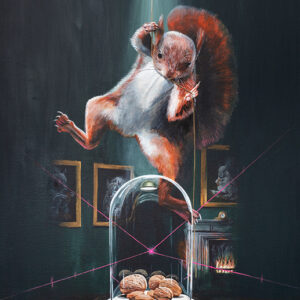
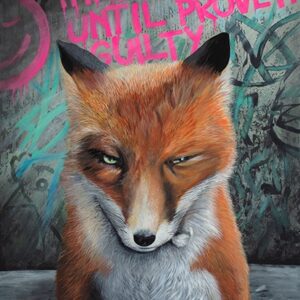

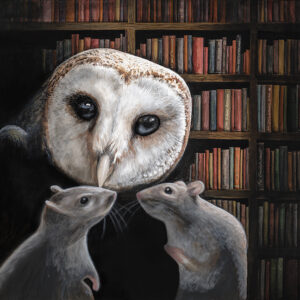
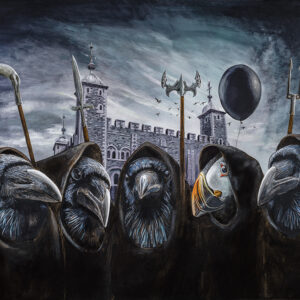

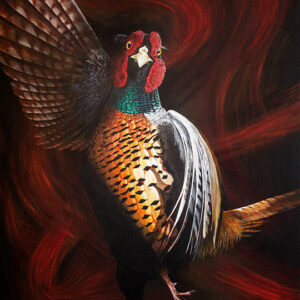
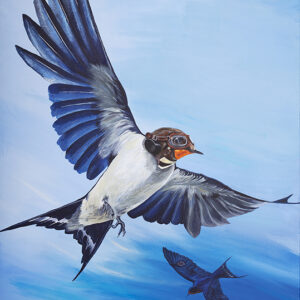
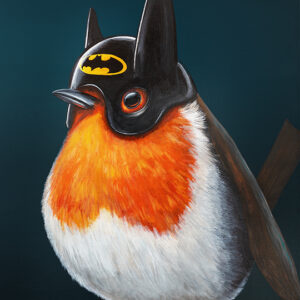
Angus Gardner is a British contemporary artist based in the North East of England. Born in Newcastle to a Scottish father and a Sicilian-Maltese mother, he inherited his father’s dry wit and his mother’s Mediterranean passion. He has painted, drawn and sculpted one way or another all his life. One of his earliest memories was as an eight year old deciding to cover the walls of his bedroom with life-sized paintings of Marvel’s Avengers – to very mixed parental reception. One wall of his bedroom has left blank but only because it was filled by an aviary full of Zebra Finches – his other lifelong passion – wildlife.
After graduating in ‘Graphic and Audio Visual Design’ his career began in New York as an art teacher and then as a graphic designer. Homesick, he returned to the North East working as an animator and video director and now for the last twenty years as a graphic artist, illustrator and designer for large corporate clients including Harrods, Harvey Nichols, Fenwicks and Fortnum and Masons.
Angus lives on a working farm bordering the North Yorkshire Moors with his wife and step-daughter, horses, hens, cats and his beloved German Shepherd dog, Obi.
Angus paints in acrylic and likes to work humour into his art, whether that’s magnifying a quirk or characteristic of the creature he’s painting, creating personalities from the wildlife people see every day to make people think of them in a different way by adding social commentary or working a related life memory into a composition or setting.
‘Ideas come to me usually whilst I’m roaming the farm with Obi, more often than not inspired by sightings. The dancing male pheasants during mating season, the early morning boxing hares, dive bombing swallows, or the robin that bosses my garden year round. Once I have an idea firmly established in my head I start to learn more about the animal – what makes it unique, what’s it’s super power – and then I move on to anatomy. Often my art requires animals to be posed in a way that they wouldn’t necessarily adopt in the wild, so gaining an acute understanding of how the joints work, how everything is connected, how the light plays on feathers, fur or skin, is critical before I start preliminary sketches to get the pose right. Once I commit to canvass, I always start with the eyes and face. It’s only once I’ve put life into their eyes that their true personality starts to come through and I can believe in the animal. Then I feel an enormous sense of duty to bring out the animal’s natural beauty – it’s like they are watching me through the whole process.’